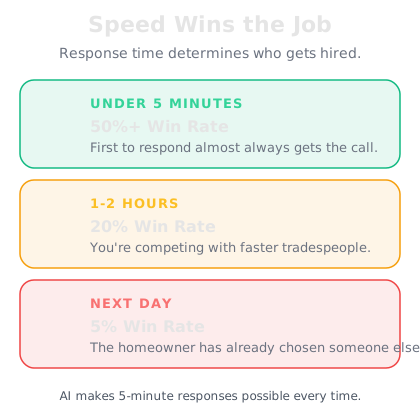
Speed Wins — Responding First
Here is the single most important thing you will learn in this entire course: the first tradesperson to respond wins the job more than half the time. Not the cheapest. Not the most experienced. The fastest.
The data backs this up across every major platform. RatedPeople, Thumbtack, Angi, hipages — they all report the same pattern. Homeowners contact the first person who replies, have a conversation, and never bother reading the rest. Your skills mean nothing if your response is sitting in a queue while someone else is already booking the job.
The Numbers Don't Lie
Research from lead platforms paints a clear picture. Tradespeople who respond within 5 minutes are 50-70% more likely to win the job compared to those who respond after an hour. On Thumbtack, the first three responders capture the vast majority of hires. On RatedPeople, leads that go unanswered for more than 30 minutes are often already gone.
Think about it from the customer's perspective. Their boiler has broken down on a Friday night. Water is coming through the ceiling. They post a job and within two minutes, a plumber responds with a clear, professional message. Are they going to wait around for six more quotes? Of course not. They are booking that plumber.
The problem is obvious: you are busy. You are on a ladder, under a sink, driving between jobs. You cannot sit at your phone writing bespoke replies to every lead that comes in. This is exactly where AI changes the game.
AI-Powered Response Templates
The trick is not typing faster. It is having your response ready before the lead even arrives. Using AI, you can build a library of quick-response templates for every common job type you handle.
Here is the workflow. You tell AI your trade, your service area, and the types of jobs you do most often. It generates a set of templates you can fire off with two taps on your phone. Each template is professional, warm, and specific enough that it does not feel like a copy-paste job.
For example, a plumber might have templates for: emergency callouts, bathroom renovations, boiler installs, leaking taps, and blocked drains. An electrician might have: consumer unit upgrades, rewires, socket additions, lighting installs, and fault finding. A roofer might have: storm damage, flat roof repairs, gutter replacement, tile replacement, and full re-roofs.
Each template includes your name, a brief acknowledgment of their specific problem, your availability, and a clear next step.
The Mobile Workflow — Respond From Your Van
Your phone is your best sales tool. Here is a practical workflow you can use between jobs:
Step 1: Turn on notifications for your lead platforms. RatedPeople, Thumbtack, Angi, hipages — whatever you use. Make sure alerts are on and loud.
Step 2: Save your AI-generated templates in your phone's notes app, a text expander, or even as saved replies in WhatsApp Business.
Step 3: When a notification pops up, read the job description, pick the closest template, and personalise one or two details. Change the name, mention their specific issue, adjust your availability.
Step 4: Send. The whole process takes under 2 minutes. You can do it sitting in your van eating a sandwich.
The key is that your templates do the heavy lifting. You are not writing from scratch every time. You are tweaking a proven, professional message and hitting send before anyone else has even opened the app.